
A funeral and a half

Today, I don’t know what train of thought led me there, but I found myself thinking of my Thamma, the mother of my father. Ever since I was a kid, I remember her being old, but towards the end, she was old and frail. For the last six months, she couldn’t recognize me or my father at all, and I am certain she also could not see.
My mother told me Thamma was married off young, when she was in primary school, and then she had three kids, the middle one being my father. They lived on a small piece of land in Palta, in the suburbs of West Bengal. When we were kids, I remember our family visiting her and Dadu, in their small mud room with a tin roof. We used to sit on an unusually high bed, propped up for storage space underneath, and Thamma would always be in some capacity engaged with a shrine of some god in the corner of the room. The mud walls were adorned with pictures of every god conceivable, and there always were fresh garlands of flowers hanging over the cheap frames. Thamma was deeply religious, however, I have no recollection of her ever trying to instill a fear of god(s) in us. Worship to her was love, she loved the people in the pictures, and that gave her a strength I was too young to understand or appreciate.
A small corridor from this room led to an even smaller room where Thamma did most of her cooking. Although my mother always complained about her generous use of oil, she had to admit, Thamma was the greatest cook. There was something about the way she made aamer achaar and shutki maach, that could never be replicated after she left. It wasn’t the oil, I later realized, it was the love, as cliché as that sounds. She was a woman who knew worship, dedication, and love and knew how to serve it tirelessly, with a smile on her face.
My mother, a woman of lower caste, had told me before, but I had not realized the extent to which Thamma was deeply casteist. She came to our apartment in Golf Garden one day, around 2006, and refused to touch the plates and dishes on the table simply because my aunt, who also happened to be lower caste, had served them. She somehow didn’t have this reservation against my mother, at least then, but it had been one of the many reasons why my parents had decided to elope. Maybe she was more religious than I led on. A true Hindu, one might say. After she left, I spent a lot of time trying to reconcile this reality of her to who I thought she was, which led me to a deeper understanding of prejudice. I never asked my mom how she felt, but one day years later on a slow afternoon, when we found ourselves lost in aimless conversation, she mentioned how, despite Thamma’s initial hatred for my mother and her debilitating illiteracy, Thamma had tried to pen a letter for her on one of her visit to her hometown. She remembers the letter being barely legible, but perhaps she did not need to read it to understand what it meant.
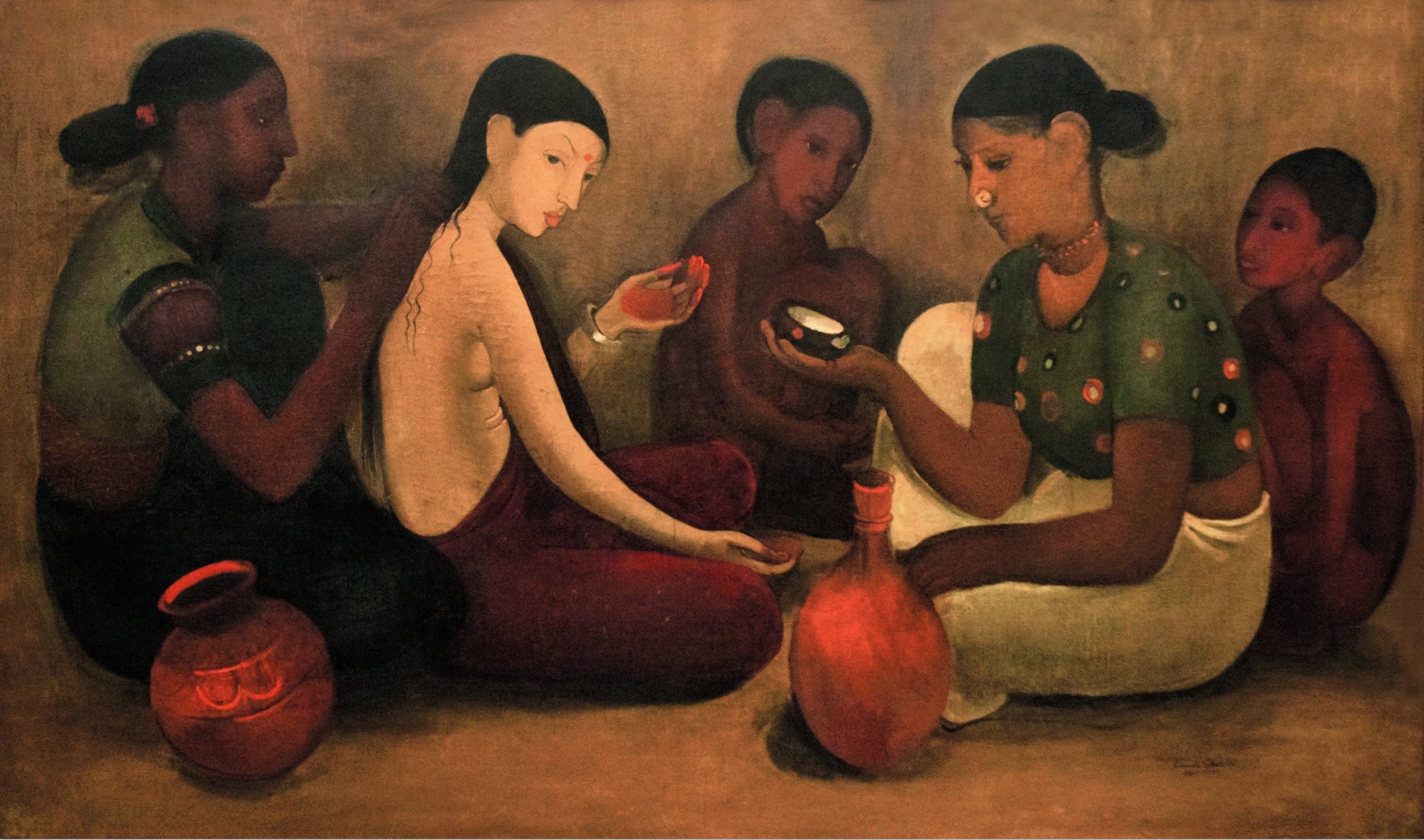
Thamma was a remarkable woman in a lot of ways. There was a selfishness in her, an urge to defend her financial territory, one could see the scars from dire poverty that take a few generations to heal. She had a daughter I heard, Korobi, who died as a baby. Thamma wanted this name for me, but my mother disagreed, it was a bad omen to name a new baby after a dead one. I always liked this name more than mine, it was beautiful and unique but most importantly, the K in my name would land me in the middle of the class roll call (read viva), the privilege I had lost with my A name.
I wasn’t the smartest child in my class. Although I understand that the education system, at least the Indian education system, does not measure smartness, I say it with the understanding that I value smartness just as much as the rest of the exam-taking skills, which is to say I don’t, but the truth is I didn’t possess any of these qualities. I was painfully mediocre, I lived in my own world, which was also equally mediocre. In my final exam, I got something a bit less than 90%, which resulted in my father not speaking to me for six months, a feat that required considerable effort in an apartment as small as ours. The worst of it all, I found this out at the end of the six months when my mother informed me that my father was avoiding me or that he was done, I do not remember which, and that probably gives the best picture I can provide of our relationship. Not to say my mother wasn’t displeased, this had been a common theme in her expression of her feelings towards me, but when she called Thamma to inform her of the great tragedy of my results, Thamma was happy. Nothing will ever be enough I am happy with what she got, she had said, and that she was proud of me. I understand what it means now, from a woman with such limited acquaintance with the world of education, and I wish she could know how her words with my mom on the phone still send ripples through my life, as I sit on my laptop in an apartment thousands and thousands of miles away, in space and in time. I think she knows.
In her last years, she was half her height, both in stature and spirit. I got the phone call when I was in college in a meeting with a friend, my father simply said “She has expired”, in English. I rushed back home and we drove to the nursing home, and a truck with a glass casket carried her back to her house. The women of the town gathered around her lifeless body, crying and howling, there is a bit of pretense here, and admittedly so, it is an undeniable part of our culture. She had earned the tears, pretense or otherwise, through her love and ferocious generosity in the late years.
I could only be there for a part of her funeral, I was needed in Delhi for some unrelated work, which eventually I had to cut short a week later as this was the time the pandemic of 2020 took its initial brutal form. I took a quickly planned flight back to Kolkata, which I now realize I still haven’t paid my friend back for, and I was forced to live in the basement of my cousin’s house in Palta for a month. After the lockdown was eventually overcome by the sheer will of people not willing to stay inside, I went walking one day and instinctively found myself near Thamma’s house. As I stood there on the brick road of the small street that led to the back of the house, I realized I had stood exactly there about a month before, in a wave of people paying their respects. It hadn’t occurred to me at that point, I had not processed her leaving.
I had been a mediocre student, a mediocre daughter, and a mediocre granddaughter. There is no denying that when my mom used to drag me to her house, I had gone against my wishes, reluctantly engaged in conversation with a woman who waited endlessly for my arrival. I was of the city, she was of the village, and we had nothing in common except the blood in our veins. All her life she only saw me in my mediocrity and yet, she was proud of me, of my reluctance, of my existence.
They say funerals are not for the dead but for the living. In that case, for me, the funeral never happened. Thamma left, but in my mind, I had time, I had more time to get to know her, to see her as a woman, to imagine her standing in the small plot in front of her house commanding her three children, in her grief of losing her daughter, and in her pride of finding her in me. I thought I had more time, to give you this funeral. So here it is. For me and you. I hope you are doing well Thamma, I am still mediocre, and I know you are still proud of me.